
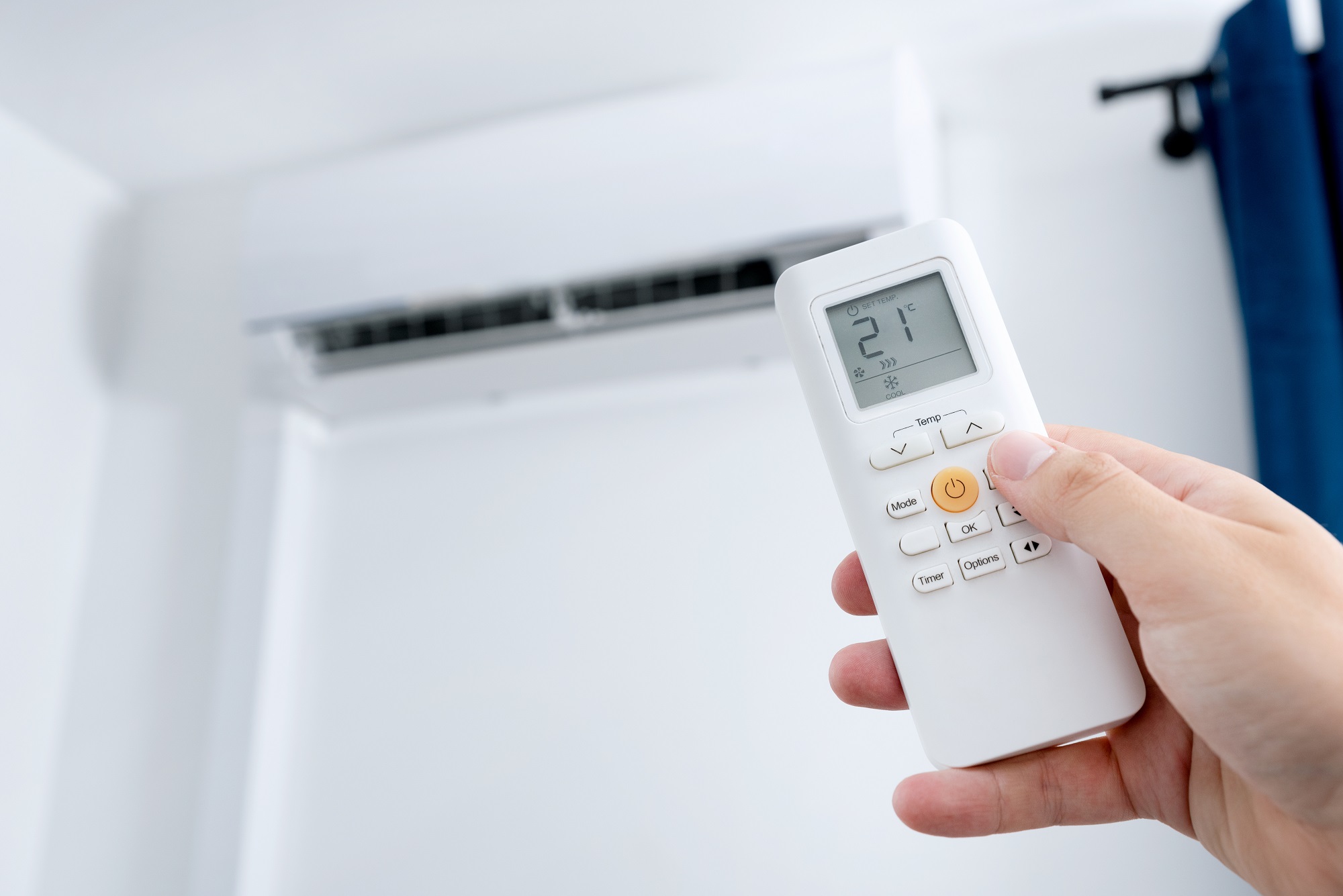
Why Balanced Airflow Can Make Or Break a New Cooling System
A new air conditioner can be correctly sized and highly efficient, yet some rooms may still feel warmer than others if the ductwork doesn’t move air properly. During air conditioning installation in Vancouver WA projects, static pressure mapping gives technicians a clearer picture of how air travels through the HVAC system.
Static pressure mapping measures pressure differences within an HVAC system to reveal restrictions, imbalances, undersized ducts, excessive filter resistance, and other airflow problems. Technicians use these readings to adjust duct design, system calibration, blower performance, and register settings so that conditioned air reaches occupied spaces more evenly.
Smart HVAC provides professional air conditioning installation services throughout Vancouver, WA, with options that include central air conditioning, heat pumps, and ductless systems. Its technicians consider the building’s layout, equipment requirements, and airflow conditions rather than treating the cooling equipment as an isolated component.
Which 5 Installation Problems Can Create Uneven Cooling?
Uneven cooling rarely has one universal cause. One common issue is undersized ductwork, which can restrict airflow even when the air conditioner itself has sufficient capacity. Another is poorly designed return air, which can prevent the system from pulling enough air back through the HVAC system. A third problem is excessive resistance from restrictive filters or clogged components, while sharp bends, crushed duct sections, and poorly sealed connections can create additional losses.
Another challenge occurs when the air conditioning system is installed without considering the building’s individual zones. A large open living area may have very different cooling demands from a small upstairs bedroom, especially in Vancouver, WA, where solar exposure, insulation, windows, and building orientation can all affect heating and cooling requirements.
Improper thermostat placement can add another layer of trouble. Smart thermostats and conventional controls depend on accurate temperature readings, so a poorly positioned thermostat may cause the air conditioning system to cycle before distant rooms reach the desired temperature. Proper thermostat Installation and system calibration help prevent that mismatch.
Smart HVAC approaches these concerns as connected parts of the same system. Its installation work includes equipment selection, setup, testing, and evaluation rather than simply placing a new air conditioner outside and connecting it to existing components. The company has served Vancouver, WA, with heating and cooling solutions since 2022.
How Does Air Conditioning Installation in Vancouver WA Reveal Hidden Airflow Problems?
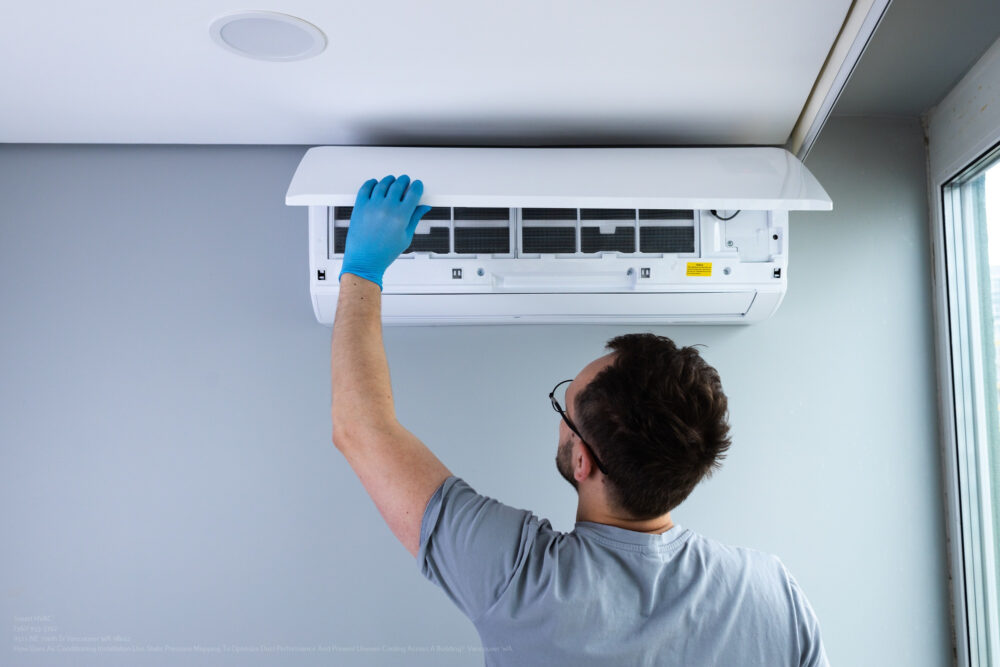
Static pressure is the resistance an HVAC blower encounters as it moves air through the system. When pressure becomes too high or uneven, the blower has to work harder, airflow can fall, and certain areas may receive too little conditioned air. The U.S. Department of Energy notes that excessive static pressure can reduce airflow, increase fan power, and negatively affect air conditioner performance.
During an installation, a technician can take pressure readings at strategic points before and after filters, coils, supply ducts, return ducts, and other components. These measurements create a pressure profile of the HVAC system.
People Also Ask: Can static pressure affect cooling efficiency? Yes. Excessive resistance can restrict airflow, make the blower work harder, and prevent an air conditioning system from delivering its intended cooling performance. That’s particularly important in larger homes and commercial HVAC applications where long duct runs and multiple zones can create more opportunities for imbalance.
Ready for Professional Air Conditioning Installation?
Contact Smart HVAC today for reliable cooling and better home comfort.
What Does A Real-World Airflow Evaluation Tell a Technician?
Consider a two-story Vancouver home where the downstairs stays comfortable but several upstairs bedrooms remain noticeably warmer. The homeowner might assume the air conditioner is too small or needs AC repair. Yet static pressure measurements could reveal that the cooling equipment is operating normally while airflow through the upstairs branches is restricted.
The technician can then examine the return-air arrangement, duct dimensions, branch connections, dampers, filter resistance, and supply registers. If the problem is airflow-related, correcting the distribution network may accomplish more than replacing a perfectly functional air conditioner.
This is also where system calibration becomes important. A properly installed HVAC system still needs to be tested under operating conditions. Blower settings, thermostat controls, temperature differences, and airflow should work together rather than operate as disconnected pieces.
Smart HVAC’s approach to residential and commercial heating and cooling reflects this systems-based thinking. Its installation services include central air conditioning, ductless systems, heat pumps, and integrated options, allowing technicians to consider the building’s layout and comfort requirements when recommending equipment.
Homeowners can also benefit from discussing future needs during installation. If indoor air quality upgrades, an air purifier, UV lights, or a higher-efficiency media filter are being considered, the added resistance of those components should be accounted for when evaluating airflow.
What are the Most Important Airflow Optimization Takeaways?
Static pressure mapping isn’t simply another measurement taken during an air conditioning project. It’s a way to understand whether the entire air distribution system is working together. Equipment sizing, duct design, filter selection, return airflow, control wiring, blower performance, and system calibration can all influence the final result.
A high-efficiency air conditioner won’t automatically solve an airflow problem. Likewise, installing an Energy Star-rated system doesn’t guarantee that every room will receive equal cooling if the duct network is poorly configured. Efficient equipment requires an appropriately designed pathway to deliver that efficiency into occupied spaces.
The same principle applies when installing heat pumps, ductless mini-split systems, or mini-split AC units. Each system has different airflow characteristics and installation requirements. For homes without suitable ductwork, ductless mini-split systems may be a useful alternative. At the same time, central air conditioning can make sense when the existing ductwork is properly designed and capable of supporting the new equipment.
Homeowners should also remember that installation is only the beginning. Preventative maintenance and HVAC maintenance can help identify developing airflow restrictions, dirty filters, abnormal blower performance, and other issues before they become larger comfort problems. When airflow remains balanced, an air conditioning system has a stronger foundation for dependable home comfort in Vancouver WA.
Why Smart HVAC is a Smart Choice for Air Conditioning Installation
We at Smart HVAC provide solutions designed around the building, the equipment, and the people who depend on the system for comfort. Our approach to air conditioning installation considers airflow, efficiency, equipment selection, and system performance instead of treating installation as a one-size-fits-all job.
Our team provides professional HVAC service for residential and commercial customers, with a focus on reliable workmanship, customer service, and long-term comfort. Smart HVAC also works with recognized equipment brands, including American Standard and York, while offering options such as heat pumps and ductless systems.
When static pressure mapping shows that duct performance needs attention, our technicians can use those findings to make informed installation and calibration decisions. Contact Smart HVAC for expert air conditioning installation in Vancouver, WA, and let our team help create a more balanced, efficient cooling system.
For dependable air conditioning installation in Vancouver WA, Smart HVAC combines careful airflow evaluation, professional installation, and practical system optimization for lasting comfort.
Ready for Professional Air Conditioning Installation?
Contact Smart HVAC today for reliable cooling and better home comfort.